

Sandra had been a home care coordinator at a regional nonprofit for eleven years. She knew the intake process cold. So when a new volunteer, David, called her confused about the emergency escalation steps in the updated onboarding procedure, she wasn’t worried. She walked him through it from memory.
Two weeks later, a client situation escalated. David followed the written procedure — not Maria’s verbal override — and called the wrong contact. Everyone was fine, eventually. But the incident report revealed something uncomfortable: the procedure itself was wrong. A phone number had changed six months ago. Nobody had updated the document.
David had noticed the number looked odd when he first read it. He had no way to say so.
The Gap Between the Reader and the Writer
Procedures are written by people who understand a process deeply. They’re read by people who are closer to the work, often finding edge cases and real-world gaps that the author never encountered. Without a channel for that knowledge to travel upstream, organizations run on documents that drift further from reality with every passing month.
The solution isn’t a rating system. Ratings tell you that something’s wrong. They don’t tell you what or how to fix it. What you need is a voice — a structured way for the person reading a procedure to say: this step is missing a decision point, or the contact here retired in March, or in our region, this works differently.
Feedback as a Living Signal
Imagine David, reading that escalation procedure on his first week, sees a small prompt: Something missing or unclear? Let us know. He types a note: “The emergency number in Step 4 doesn’t match what’s posted at the front desk. Which one do we use?”
That comment doesn’t disappear into a void. It routes directly to the procedure owner — in this case, the Director of Care Operations. She sees it flagged in her queue, alongside the specific section David was reading when he wrote it.
She responds: “Great catch, David. The front desk number is correct — we updated the system in Q3 but the procedure wasn’t synced. I’ll revise this week.”
That exchange matters. It’s not just a correction. It’s a signal that feedback is read, that the process is responsive, and that frontline workers have real influence over the tools they use. That signal makes the next person more likely to speak up.
From Comment to Release
The Director revises Step 4, marks it for internal review, and a second set of eyes approves the change. The procedure moves to a new version — not a quiet overwrite, but a tracked revision with a change summary: Updated emergency escalation contact to reflect Q3 staffing change. Flagged by onboarding volunteer.
Now the system does something important: it identifies everyone who previously attested to Version 1.2. They receive a notification. This procedure has been updated. Please review the changes and re-acknowledge.
David gets one too. He reads the update, sees his name acknowledged in the change log, and signs off. The audit trail is clean. The organization can demonstrate, if ever asked, exactly when the error was discovered, how it was corrected, and who confirmed the updated version.
Closing the Loop Is the Product
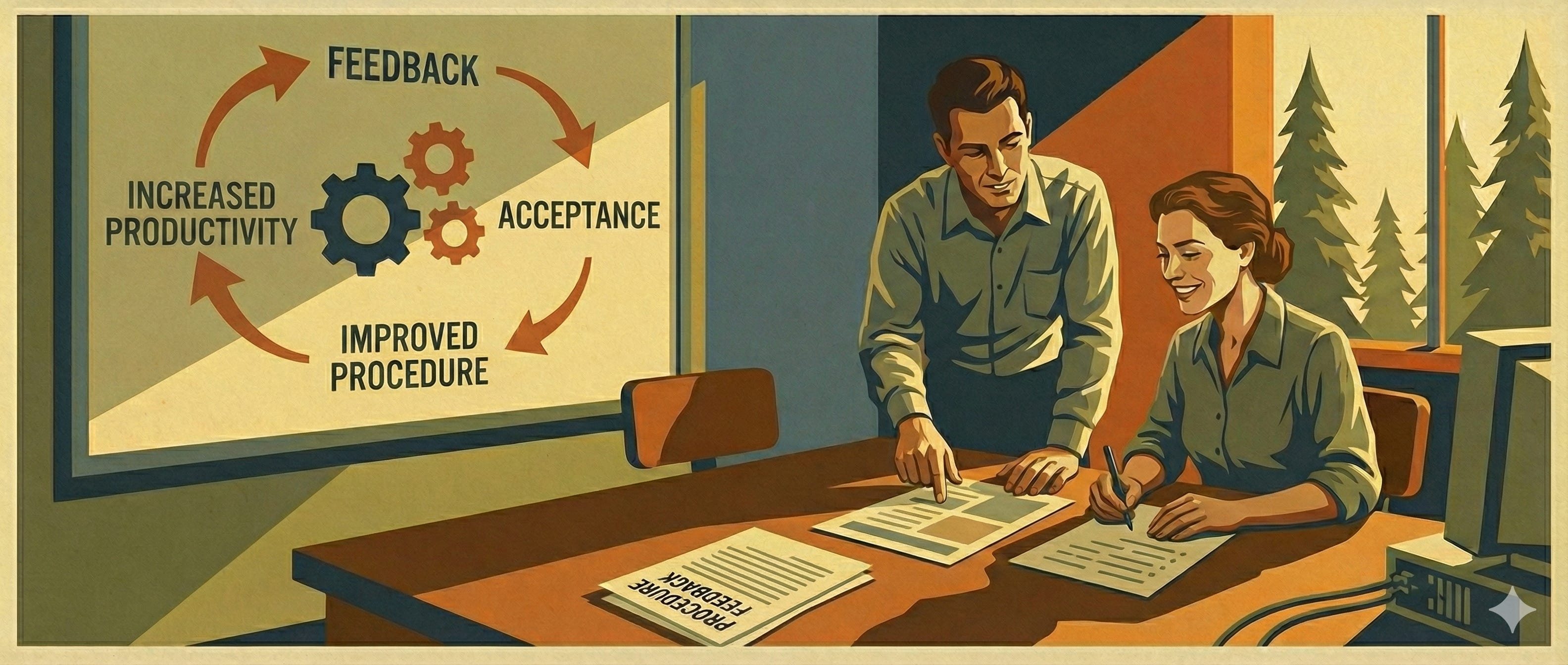
The feedback wasn’t the end of the story. It was the beginning of a process — comment, conversation, revision, release, attestation — that transformed a passive document into a living one.
Organizations that treat procedures as finished products the moment they’re published are accumulating invisible risk. The people closest to the work almost always know something the document doesn’t. The question is whether you’ve built a way for them to tell you.
PolicyCo makes that loop possible — from the first read to the final signature.